Choosing your next braided hairstyle can be exciting. But if you are trying to decide between knotless braids and traditional box braids, you may be wondering which one is better.
Both styles can look beautiful, protect your natural hair from daily styling, and give you plenty of ways to change your look. However, they differ in how they are installed, how they feel at the roots, how much they cost, and how much care they may need.
The best choice depends on your budget, your preferred look, your schedule, and the condition of your natural hair.
In this guide, we will compare knotless braids vs. box braids so you can choose a style that works for you.
What Are Knotless Braids?
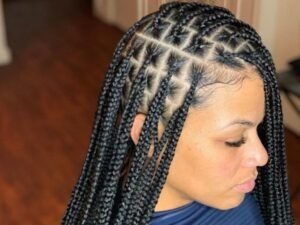
Knotless braids are a type of box braid that starts with your natural hair before the braider gradually adds extension hair.
Because the extension hair is fed into the braid little by little, the roots usually look flatter and more natural than traditional box braids.
Many people choose knotless braids because they like the smooth finish and the way the braids move.
Benefits of knotless braids
-
Flat roots: The braids usually begin without the raised knot associated with traditional box braids.
-
Natural-looking finish: The roots can blend more closely with your natural hair.
-
Flexible styling: Depending on their size and length, you can wear them down, in a ponytail, or in an updo.
-
Potentially less initial tension: The installation method may reduce some of the pulling associated with extension hair attached tightly at the roots. However, knotless braids can still cause damage if they are installed too tightly or are too heavy.
Possible disadvantages
-
Knotless braids may take longer to install because the braider adds extension hair gradually.
-
They can cost more because of the additional installation time.
-
The roots may become untidy or loosen as your natural hair grows.
-
They still require proper washing, moisturizing, and gentle handling.
Knotless braids are worth considering if you prefer flat roots and a natural-looking finish.
What Are Traditional Box Braids?
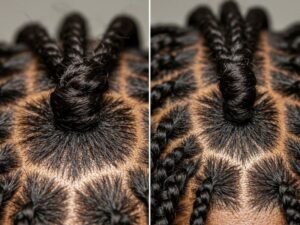
Traditional box braids are created by dividing the hair into small or large sections and attaching extension hair at the root, often creating a visible knot.
The name comes from the square or box-shaped sections used to divide the hair.
Box braids are popular because they offer many styling options. You can choose short or long braids, small or jumbo sections, and different colors to suit your personal style.
Benefits of box braids
-
Classic appearance: They have a familiar, defined look that many people love.
-
Many size options: You can choose anything from tiny braids to jumbo box braids.
-
Potentially lower installation cost: They may be quicker to install than knotless braids, depending on the size, stylist, and technique.
-
Versatile styling: You can wear them loose, in a bun, or in other protective styles.
Possible disadvantages
-
The knots at the roots may feel bulky to some people.
-
Tight installation can cause discomfort and place stress on the hairline.
-
Long or thick braids can become heavy.
-
You may need to pay attention to the roots as your natural hair grows.
Traditional box braids may suit you if you love the classic braided look and want to explore different braid sizes and lengths.
Knotless Braids vs. Box Braids: What Is the Difference?
Here is a quick comparison of the two styles.
| Feature | Knotless braids | Traditional box braids |
|---|---|---|
| Root appearance | Usually flat and natural-looking | Often has a visible knot |
| Installation | Extension hair is added gradually | Extension hair is usually attached at the root |
| Installation time | Often longer | May be quicker |
| Salon price | Often higher | May be lower |
| Initial comfort | May feel lighter at the roots | Knots may feel bulky or tight |
| Styling | Flexible, depending on size and length | Flexible, depending on size and length |
| Maintenance | Needs regular scalp and braid care | Needs regular scalp and braid care |
| Potential hair stress | Can cause damage if tight or heavy | Can cause damage if tight or heavy |
These are general differences, not fixed rules. Your experience will depend on your hair, the stylist’s technique, the amount of extension hair used, and how you care for your braids.
1. Which Style Looks More Natural?
If you want braids that look as though they begin directly from your scalp, you may prefer knotless braids.
The gradual addition of extension hair usually creates flatter roots. This can give the hairstyle a softer appearance, especially when you wear the braids down or pull them into a ponytail.
Traditional box braids have a more defined root because the extension hair is attached at the beginning. Some people prefer this appearance because it gives the braids a classic, structured look.
Which should you choose?
Choose knotless braids if you prefer a flatter root and a natural-looking finish. Choose traditional box braids if you like the visible knots and classic appearance.
Neither style is more beautiful than the other. It comes down to your personal preference.
2. Which Style Is More Comfortable?
Comfort is an important factor, especially if you plan to keep your braids for several weeks.
Knotless braids may feel more comfortable around the roots because the extension hair is added gradually instead of being attached all at once.
However, knotless braids are not automatically tension-free. If the braider pulls your natural hair too tightly, the style can still hurt.
Traditional box braids can also be comfortable when installed correctly. The problem occurs when the roots are too tight or the braids are too heavy.
The American Academy of Dermatology warns that hairstyles that repeatedly pull on the hair can contribute to traction alopecia, a type of hair loss caused by tension.
If you have experienced pain or soreness after braiding, read our guide to signs your braids are too tight once you confirm that the article is still published.
My advice: Do not choose a hairstyle based on appearance alone. Tell your braider that you want a comfortable style without excessive tension.
3. Which Style Is Better for Natural Hair?
Both styles can be worn on natural hair, but neither automatically guarantees healthy hair.
Your hair’s condition before installation, the tightness of the braids, the weight of the extensions, and your maintenance routine all matter.
For example, if your hair is already weak or breaking around the edges, adding heavy extensions may put more stress on it.
To protect your natural hair:
-
Start with clean, gently detangled hair.
-
Avoid braids that pull tightly at the hairline.
-
Ask for a size and length that your hair can comfortably support.
-
Do not ignore pain, stinging, or scalp irritation.
-
Give your hair a break between braided styles when needed.
If you are worried about breakage or thinning, our article on whether braids can cause breakage, damage, or hair loss may help you understand what to watch for, provided the URL is still live.
Remember that protective styling should not come at the expense of your scalp or natural hair.
4. Which Style Costs Less?
Traditional box braids may cost less to install because some installation methods take less time. Knotless braids often cost more because the stylist adds extension hair gradually.
However, prices vary widely depending on where you live, the salon, the stylist’s experience, the braid size, the length, and whether you bring your own extension hair.
A small knotless style that takes several hours may cost more than a larger, simpler style. The same is true of traditional box braids.
When comparing salon prices in the United States or Canada, ask what the quote includes.
Check whether the price covers:
-
Hair extensions
-
Shampooing and blow-drying
-
The requested length and braid size
-
Additional styling, such as curls or accessories
-
Any extra charge for very long or small braids
Do not choose a stylist based on price alone. A good installation should respect your scalp, natural hair, and comfort.
5. Which Style Takes Longer to Install?
Knotless braids often take longer because the stylist feeds extension hair into each braid gradually.
Traditional box braids may be quicker to install, although small braids and very long styles can take a considerable amount of time.
Your appointment time will depend on the stylist’s speed, the size of the braids, the length you want, and the amount of hair being installed.
Before booking, ask the stylist for an estimated completion time. This is especially useful if you have work, school, or family responsibilities to plan around.
If you know you will be sitting for several hours, bring water and anything else the salon allows that will make you comfortable.
6. Which Style Lasts Longer?
There is no single timeline that applies to every person.
Traditional box braids may maintain their appearance for longer in some cases, while knotless braids may begin to look untidy around the roots as natural hair grows. But the result depends on the installation, braid size, hair growth, activity, and maintenance.
Do not keep braids in longer simply because they still look attractive.
Your scalp needs regular care, and your natural hair needs attention even when it is covered by extensions. If you notice persistent itching, buildup, matting, breakage, or thinning, you may need to remove the style sooner.
The American Academy of Dermatology recommends avoiding hairstyles that pull on the hair and removing or loosening styles that cause pain or irritation.
Ask your stylist how long your particular style should remain in place. Inspect your scalp regularly rather than relying only on how the braids look.
7. Which Style Is Easier to Maintain?
Both knotless braids and traditional box braids need regular care.
Your routine does not have to be complicated, but it should include cleaning your scalp, handling your hair gently, and protecting your braids while sleeping.
Here are some simple maintenance tips:
Clean your scalp
Sweat, oil, dead skin, and product buildup can collect between your braids. Clean your scalp gently and rinse thoroughly.
Avoid scrubbing your braids aggressively, as this can increase frizz and tangling.
For detailed instructions, see our guide on how to wash braids without ruining them, after confirming that the article is still available.
Protect your braids at night
A satin or silk bonnet, scarf, or pillowcase can help reduce friction while you sleep.
Avoid tying your braids into a tight bun every night, especially if you feel pulling around your hairline.
Moisturize thoughtfully
Use suitable products to help prevent your natural hair from becoming excessively dry. Avoid applying so much product that buildup becomes difficult to remove.
Be gentle with the roots
Do not repeatedly pull, twist, or brush the roots to make them look freshly installed. Excessive manipulation can stress your natural hair.
8. Can Knotless Braids or Box Braids Damage Your Edges?
Yes, either style can contribute to edge damage if the braids are too tight, too heavy, or repeatedly pull on the same areas.
The edges are particularly vulnerable because the hairs around the hairline can be delicate. Adding long, heavy extensions or pulling braids into tight ponytails may increase tension.
To help protect your edges:
-
Ask your stylist to braid gently around your hairline.
-
Avoid adding excessive extension hair to delicate sections.
-
Choose a manageable braid length and size.
-
Do not force your braids into tight updos.
-
Remove the style if it causes pain or irritation.
Watch for broken hairs, thinning around the hairline, bumps, or ongoing soreness. If you notice these signs, stop wearing the tension-causing style and seek advice from a dermatologist, particularly if the hair loss continues.
9. Which Style Is Better for Beginners?
If this is your first time getting extensions, knotless braids may appeal to you because of their flat roots and natural-looking finish.
However, traditional box braids are also a reasonable option if you prefer their appearance or want to compare salon prices.
Instead of choosing based only on what is trending, think about the following questions:
-
Do I prefer flat roots or visible knots?
-
How much can I comfortably spend?
-
How long can I sit for the installation?
-
Do I want short, medium, or long braids?
-
Is my natural hair strong enough to support the length and weight I want?
-
Can I maintain the style properly?
If you are unsure, show your stylist reference pictures of both styles. Ask which option would work best with your natural hair and scalp condition.
How to Choose Between Knotless Braids and Box Braids
Use this simple guide to help you decide.
Choose knotless braids if:
-
You prefer flatter roots.
-
You like a natural-looking finish.
-
You are willing to spend more time in the salon.
-
You have a budget that allows for the stylist’s knotless-braiding price.
Choose traditional box braids if:
-
You like the classic, defined root appearance.
-
You want to compare potentially lower installation costs.
-
You prefer the traditional box-braid look.
-
You have found a stylist who can install them without excessive tension.
Consider either style if:
-
You want a versatile protective hairstyle.
-
You are prepared to care for your scalp and natural hair.
-
Your stylist can recommend an appropriate braid size, length, and weight.
Neither option is the right choice if the installation causes pain or places excessive stress on your scalp.
Frequently Asked Questions
Are knotless braids better than box braids?
Not for everyone. Knotless braids usually have flatter roots, while traditional box braids have visible knots. Knotless braids may feel more comfortable at the roots, but either style can cause damage if installed too tightly or made too heavy.
Are knotless braids more expensive than box braids?
They often are because the installation can take longer. However, salon prices depend on location, stylist experience, braid size, length, and whether extension hair is included.
Do knotless braids last as long as box braids?
Both can last for several weeks, but the results vary. Root growth, installation quality, braid size, and maintenance all affect how long the style looks neat. Follow your stylist’s guidance and remove the braids if you experience scalp problems.
Which braids are better for thin edges?
Neither style is automatically safe for thin edges. Ask for a gentle installation, avoid heavy extensions, and do not allow the stylist to pull tightly around your hairline. If you already have thinning or persistent hair loss, consult a dermatologist.
Can I wash knotless braids and traditional box braids?
Yes. Both styles can be washed carefully. Focus on cleaning the scalp, rinsing thoroughly, and drying the braids properly. Avoid rough handling that can cause frizz or tangling.
Are knotless braids completely tension-free?
No. Knotless braids change how extension hair is added, but they can still pull on the scalp if they are installed too tightly or are too heavy.
Which style is easier to style?
Both offer many styling options. Knotless braids may feel more flexible around the roots, while traditional box braids offer a classic look. Your chosen length, size, and installation technique also affect styling.
Conclusion
Knotless braids and traditional box braids are both versatile hairstyles, but they offer different looks and installation experiences.
Knotless braids may be your preference if you want flat roots and a natural-looking finish. Traditional box braids may suit you if you love the classic appearance and want to compare installation costs.
Before choosing, consider your budget, the time required, the weight of the extensions, and the condition of your natural hair.
Most importantly, your braids should not hurt. Choose a skilled stylist, avoid excessive tension, and take care of your scalp while wearing either style.
The best hairstyle is one that makes you feel confident while allowing you to care for your natural hair.